]]>
This year, I’m protecting myself and my children with a visit to a homeopath. Why? I’ve never really trusted flu vaccines: they aren’t safe for pregnant women and babies and that has always either excluded me or made me wonder about them. Plus, you don’t pass on antibodies to diseases you have been vaccinated against and while I am still nursing, I want to be able to pass on antibodies to my baby. Here is a recent article that homeopath Sonya McLeod from Little Mountain Homeopahty wrote on the flu, alternatives to vaccination, and her experience as a homeopath and mother. Sonya has written extensively on many of these issues on her blog, that coupled with her scientific publications, and her recent 2011 Consumer Choice Award win, encouraged me to visit her clinic.

Natural protection from the flu
I remember two years ago at this time, when swine flu was the thing everyone feared. This despite the fact that swine flu killed far less people than regular influenza. The regular flu kills approx. 250,000 – 500,000 people each year worldwide. Swine flu killed a tiny fraction of that number.
Unlike many other parents, I am not worried at all if my kids are exposed to the regular flu, swine flu, or the next flu “epidemic” on the horizon. This is because I have had years of formal training in classical homeopathy, a natural healing art that has been used successfully for the treatment of all types of flu for more than 200 years.
My kids will not be getting a flu shot this year. Thanks to long-term constitutional homeopathic treatment, my kids have a strong immunity. So I don’t even have to worry about protecting them against the flu: most people who die from the flu have compromised immune systems. But if for some reason I were worried about my kids getting the flu, I would give them the homeopathic remedy influenzinum. Influenzinum is made from flu viruses and then prepared in a homeopathic manner so as to render it safe and nontoxic. It has been used for at least the past 150 years as a natural flu preventative. In 1998, the Société Franí§aise d’Homéopathie conducted a survey of 23 homeopathic doctors and 453 patients concerning their use of influenzinum as a flu preventative over a 10-year period. Results of the survey were remarkable. In approximately 90 percent of the cases, no instances of the flu occurred when influenzinum was used.
My children are young, and their immune systems are still developing, so there is a chance that they will end up getting the flu this year. If they do, I will be treating them confidently with homeopathy, which was used effectively to treat one of the deadliest strains of flu in history, the 1918 Spanish flu. During the Spanish flu, Americans who were treated with traditional medicine had a mortality rate of 28.2 percent, while those who were treated with homeopathic medicines only had a mortality rate of 1.05 percent, according to a report by the American Homeopathic Institute in 1921.
There are many possible remedies for the flu, depending upon the particular symptoms that the infected person is experiencing. During the Spanish flu, homeopathic gelsemium was the most frequently used remedy. In general, gelsemium is thought of as the number-one remedy for the flu. Homeopathic bryonia and Eupatorium perfoliatum are also very frequently used remedies.
Perhaps the most frustrating thing about homeopathy is that it is often difficult to decide between one homeopathic remedy and another. If you are not sure which remedy to use for the flu, a sure bet is Oscillococcinum. Oscillococcinum is a homeopathic remedy invented in 1925, made from the liver and heart of a Barbary duck. There have been two large double-blind, placebo-controlled clinical trials measuring the efficacy of Oscillococcinum for the flu. The results of the first trial were published in 1989 in Britain’s Journal of Pharmacology, and the results of the second trial were published in 1998 in the Homeopathic Journal. The studies showed that Oscillococcinum reduces the duration of the flu, speeds recovery, and reduces flu symptoms such as pain, fever, and backache.
Homeopathy is a safe medicine for the flu, with no side effects; the same cannot be said for traditional flu treatments.
Sonya McLeod is a Vancouver homeopath. Much of this article originally appeared in the Georgia Straight and is republished here with permission from the author. Introduction by Manda Aufochs Gillespie, The Green Mama.
I’m a city girl. I have spent most of my life living in cities. Some of my favourite places in the world are cities. Give me a day in Chicago, Istanbul, London, Edinburg, Delhi, Montreal… these places are alive, diverse, and full of culture and interesting cuisine. So, I was as surprised as anybody when I decided to leave behind my city life in Vancouver to move to a tiny little island. This island has fewer than 1,000 full-time residents and is two to three ferries from the nearest big city: about 8 hours. The island has no shopping centres, no restaurants in the winter, no traffic lights, no hospital, and only one tiny little school that serves grade-school children.
The last time we left the weather caused our last ferry to be cancelled again and again. We drove six hours and sat by the sea in a little six hours before, finally, arriving home late in the deep, deep darkness. Darkness like I never really experienced until moving to someplace so remote. It’s dark a lot here these days: the sun doesn’t rise until after 8 and it sets around 4. There are no road lights, no reflectors even, and there is virtually no light pollution. I find I know whether or not there is a moon and plan around it.

We don’t live particularly near anybody other than our good friends—Green Mama helper and House School teacher, Laura— who live right next door on the same property. Today, instead of tucking away in my office in the barn, I’m sitting on my couch with the fire behind me and a view of the stormy ocean in front. In my old life, by this time of the day I would have rushed out the door of our apartment, jumped in the car with my two kids, driven 30 minutes out of the city to the closest Waldorf school, checked in and said hello (much to the annoyance of my youngest) with a few dozen people, and then walked to the library for three hours of writing time and then walked back, gotten my youngest, driven back home. Prepared lunch, started dinner, driven to the school bus for my eldest, driven home and prepared dinner.
These days, we wake up leisurely and cuddle a bit in bed. Then I go downstairs to make a fire, prepare breakfast, and the kids walk a few paces for school. For the four hours they are in school and a couple of hours after, I am writing. Then the rest of the day is mostly chores: bringing in wood, sweeping, folding, preparing food.
I have done things I thought I’d never do. I have buried my first rat (it was enormous and I was so freaked out I buried it with the trap still on its head). To be fair, I didn’t catch the rats or dispose of the other five, that was done by Laura’s husband who built his own bucket rat trap! I have also gutted my first fish. Make that 10 enormous Salmon. Again, this was a growing opportunity for both Laura and I. We spent hours outside in the dark and rain as a storm blew in, knifing open the salmon. This is very bloody and gooey work. And hard. It’s not easy chopping off a fish head or tail or fins. (Perhaps you already know this first hand and now I do too.) Did I mention that Laura is a vegetarian?
And I cook. I have put away dozens of jars of apple sauce, sliced apples, fish broth, fish steaks, whole gutted fish without heads or tails. I have made kimchi by the bucket and I have homemade apple cider vinegar brewing away.

Life is still life. Some days my children wake up and scream at me. Organic, unsalted butter costs more than $12 a pound and sometimes they run out at the one little co-op that sells it. There is nowhere on this island or any nearby island to get my some of my favourite ingredients. I’m afraid to use the ax and thus I worry a lot about wood security and getting kindling. The electricity goes out often.
I am loving it. I have friends on the island. It is beautiful. It feels like a more balanced and fulfilling life: the practical life as Rudolf Steiner would say. My husband has to work in the city—something that I am familiar with from spending time in Guatemala—and that can make it a bit more lonely. Parenting and writing can be lonely work anyway. Yet, so far, things feel great.
“Seek the truly practical life, but seek it in such a way that it does not blind you to the spirit working in it. Seek the spirit, but seek it not out of spiritual greed, but so that you may apply it in the genuinely practical life.” —Rudolf Steiner
]]>

It was a great surprise when I realized my clearly bright, gifted daughter struggled with reading, writing, counting… really, with words and symbols of all sorts. In some ways, I continue to be shocked by it though we are years past her official diagnosis and our family’s embracement of dyslexia as a gift. Like most of parenting, approaching how my children learn has forced me to reconsider what my values truly are.
Writing, learning, the world of books has been such a significant part of my life that I began to consider it essential. Not only am I a writer, but the world of books and words helped me find my way through an early childhood marked by poverty and an adolescents coloured by it’s aftermaths. As a young child I escaped into books about the olden days, royalty, or fantasy. As a young adult I escaped with the essays, grades, and scholarships that books also helped bring about. Certainly if the world of words played such an important part in my own life, then being “book smart” must be a value worth pursuing with my own children?
Then again, as any reader will tell you, when the main character holds anything too precious at the beginning of the story, you know the plot crisis will revolve around her needing to reexamine that treasure. And so life is again a bit more poetic than fiction.
What is a learning disability?

One of the benchmarks of a learning disorder is having an above-average IQ but difficulties in processing spoken or written language or symbols. It often shows up as otherwise smart people who struggle with reading or writing or can’t do math. Yet, defining a learning disorder, or even deciding on what language to use, is a challenge and full of controversy. “The new term for learning disabilities is learning disorders,” says Dr. Suretha Swart a Registered Psychologist in Private Practice in Vancouver with a background in clinical and school psychology who provides assessments and therapy to individuals of all ages. She goes on to say that just what to call a learning disability, difference, or dysfunction in itself, “Can be the topic of a thesis.”
If there is a lack of consensus on what to call learning differences, it’s no surprise that there is controversy on just about ever aspect including whether they are becoming more prevalent or whether they are disabilities versus gifts. “Some professionals argue that students are being over-identified, while others attribute changes in the number of students being identified to the relative newness of the field, changing definitions of learning disorders, and an increased openness in society to talk about, and seek out diagnosis,” says Dr. Swart.
What’s a disability versus a difference; a gift versus a disorder? The learning differences we hear about the most these days include dyslexia, attention deficit hyperactivity disorder (ADHD), and autism spectrum disorder (ASD). And while all of these are known to be able to affect a person’s learning, ADHD and ASD are not considered learning disorders by the medical and educational communities.
ADHD is called a psychiatric disorder, although it may appear alongside a learning disability. While a child with ADHD may have trouble sustaining attention and sitting still, it’s not always the case says Dr. Sanam Hafeez, a NYC neuropsychologist behind the website comprehendthemind.com. “Some may exhibit motor agitation and have difficulties sitting still and others may be the most well-behaved and quiet individual in the group. Typically, difficulties with sustaining attention, concentrating and being easily distracted are the most prevalent symptoms.”
Similarly, ASD can manifest in a form with high intelligence and learning difficulties, but it is not labelled a learning disorder either. Rather it is considered a development disorder with a genetic component: “Typically characterized by speech delays/deficits, deficits in socialization/peer interactions, and behavioural rigidities or peculiarities,” says Dr. Hafeez, who also says that: “Presentation of symptoms… can vary drastically.”
Dyslexia, dysgraphia, and dyscalculia are learning disorders according to the medical and educational communities. Dyslexia is the broadest of these “dys-es” and affects the way a person relates to symbols and their meanings; it is often used as a catch-all category for more than 70 other learning disabilities and indeed many children with other learning differences, including ADHD and ASD, will have some symptoms of dyslexia. Dyscalculia could be called dyslexia of numbers and affects a person’s ability to read, copy, and write numbers as well as their ability to comprehend and master math concepts. Dysgraphia affects the mechanics of writing
Dyslexia can overlap into symptoms of dysgraphia and dyscalculia and it tends to be far greater than writing letters backwards, which is what most people seem to associate with dyslexia. Indeed, my daughter wrote her name in a perfect mirror version for many years. Indeed, she describes reading as trying to catch the words that are busy sliding and running off the page. I stumbled upon this web code that simulates this aspect of dyslexia: https://geon.github.io/programming/2016/03/03/dsxyliea.The experts all say that dyslexia is more than the letters moving around the page. It is also associated with difficulty connecting letters with their sounds and vice versa making it a challenge for dyslexics to sound out words, rhyme, or pronounce and write letters in their proper order. It can also make it hard to associate meanings with words and symbols.
Dys-order or the gift of dyslexia?

Some psychologists, including Dr. Hafeez, object to the use of the word dyslexia, preferring to refer to the disorder as a “disability in reading and writing.” The dyslexics I interviewed, including Sue Hall, author of Fish Don’t Climb Trees, Davis Dyslexia facilitator, and the head of the Whole Dyslexic Society in turn object to referring to dyslexia as a disability. They say that it’s a difference shared by as much as ⅓ of the population and one that brings distinct advantages—most notably an ability to perceive multi-dimensionally— as well as the more commonly known challenges. The Davis Dyslexia and Autism facilitators go even further saying that ADHD and even ASD can bring some of the same advantages of dyslexia and the symptoms are correctable.
Neurodiversity is a term thrown around these days in communities of people and parents with learning differences. It represents the idea that neurological differences are a result of normal variations in human genetics. In other words, that people whose brains function differently aren’t wrong, worse-off, or disabled. Indeed, as we learn more about how our brain’s work, this becomes increasingly backed by science. In Proust and the Squid author and neuroscientist Maryanne Wolf says that “Human beings were never born to read.” She explains that not only is reading “not laid down genetically” but, significantly, “the genes associated with dyslexia have survived robustly.” She goes on to refer to dyslexia as an “untidy mix of genetic talents and cultural weaknesses.” And look at the gifts it has supplied to human culture. She mentions: Picassos’ Gurnicas and Gaudis La Pedrera, but look too at Einstein’s theory of Relativity, Rudolf Steiner’s development of Waldorf education, and the creative empire built by Walt Disney. Not to mention the books, music, theories, and inventions of the many other dyslexics throughout history.
Dr. Wolf isn’t the only one to point to the many gifted individuals who have significantly contributed to society despite or because of their dyslexia. Sue Hall, who is adamant that “dyslexia is a gift,” also points to numerous inspiring figures who have used their dyslexia to track (almost magically) various actions on a playing field or to comprehend theories not yet understood by current science. These individuals include athletes such as Magic Johnson and Muhammad Ali; artists such as Pablo Picasso and Leonardo da Vinci, Ludwig van Beethoven and John Lennon, Robin Williams and Whoopi Goldberg, Lewis Carroll and F. Scott Fitzgerald; and famous great thinkers such as George Washington, Leonardo da Vinci, Walt Disney, Rudolf Steiner, Thomas Edison, and Albert Einstein.
Tosh Harvey is 16 and if you were to ask around the rural community where he lives “Whose a responsible young person that might lead a mixed-age wilderness course” or “Who is the brightest young person you know?” or “I’m curious about the sea lion that washed up dead on my beach,” They would say: “Talk to Tosh.” He’s also the one who gets up without asking from the table and clears everyone else’s plates, washes and dries them, and then happily goes outside to do all the substantial evening chores. “Because at some point I realized that doing chores was just another way to spend time, so I might as well.”
He’s a remarkable young man. He is also diagnosed with dyslexia and “would probably be considered to have ADHD.” He says he dropped out of school in the middle of grade one, despite his farm-based school being “alternative and really great” because he felt he was losing confidence in himself. “It was in this beautiful setting on a farm and I just wanted to be outside, playing, and doing what I wanted to do in the natural world. I couldn’t see the point in what I was doing [sitting at a desk].” Since grade one, Tosh has been homeschooling.
Tosh says he feels that there is more to dyslexia than “words flying off the paper or backwards.” He says that he sees the words fine, “but trouble happens between how I see them and what my brain does.” Often, though he knows the letters, they are “meaningless pictures and symbols.” He emphasizes however that it is difficult to describe how his own brain functions: “To me how it looks, is how I think it looks to everyone else.”
The view that dyslexia is a gift is behind the Davis Dyslexia program taught by Sue Hall and created by Ron Davis, author of a The Gift of Learning and The Gift of Dyslexia, and the founder of a dyslexia correction program and a similar program for autism spectrum disorder. Davis was deemed autistic and abandoned by an educational system that didn’t know what to do with him or his inability to read. He graduated at the bottom of his class with a label of “mentally retarded.” Despite this, he was able to go on to become a successful engineer, but it wasn’t until he was 38 that he taught himself to read. Davis experimented on himself and worked with other severely dyslexic individuals and an educational psychologist to create techniques to correct the visual “disorientation” that come along with dyslexia. His programs are now taught and used all over the world for those with dyslexia and autism spectrum disorder.
Is it a gift? I asked Tosh and my own child about their dyslexia. “I don’t know if [being dyslexic] has made me who I am but I am happy with who I am. If it’s dyslexia that has given me the talents and skills that I have and if it’s dyslexia that has made it so that I can’t read, then that isn’t a bad trade,” says Tosh.
My own daughter, who is ten, says: “Some parts of it feel really nice, like being able to see things three-dimensionally is kind of fun, but when it comes to reading or writing, it’s just no fun anymore.”
But what about school?

If these learning differences are a gift, why do so many children with them struggle in school? Hall and Davis would put that blame with the education system as it exists. “Many so-called learning challenges exist purely because our current education system ignores the innate learning style of one-third of the population,” says Hall. “There is nothing wrong with their brains,” she says of dyslexics, and she includes herself in that.
The problem, says Hall, is when this gift of perception collides with an educational system that assumes verbal processing—connecting letters and sounds aka phonics— is the “right” way and isn’t able to provide meaning in a three-dimensional form for the words that we read. “In a nutshell, there are little pc computers entering Kindergarten and their are little apple macs. If the education system is pc-based, then the little apple-macs will be seen as deficient.”
I saw a living example of this in a small, international Waldorf school we attended in Guatemala. Many people believe that Guatemala has one of the highest rates of dyslexia in the world. The theories as to why abound: the children lack the neurological cross patterning that come from crawling, the perceptual gifts that go along with dyslexia helped their society more than reading, or its a genetic brain abnormality readily shared in a relatively homogenous group. Whatever the causes, what I saw in the early grades in that school was a type of learning that helped all the kids excel. The classes were taught in Spanish which for the majority of the children was not their first language. As they were introduced to their letters and numbers, the children wrote the symbols with their bodies, with their feet in the sand, on each other’s backs. They crawled on the ground and walked on the balance beam while repeating the letter. They created the letter with string and beeswax. In other words, the children had ample opportunities to embody the symbols before they were assigned their two-dimensional space on paper. As well, the children were taught through stories and actions and demonstration rather than through books so that the kids who didn’t read until the later grades could still learn with their peer group.
Hall emphasizes that if a child with dyslexia—or just about any of the learning differences that get grouped in with dyslexia—has been taught to use their imaging gift (and how to find and model meanings as needed) and protected from an over-emphasis on sound-based learning, then a learner should have no trouble integrating in any classroom or grade level.
Hall puts the emphasis on prevention. “In two days a classroom teacher can learn how to reach both the little pc and the little apple mac, and therefore the so-called learning disabilities never rise.” Indeed, I spoke with two long-time educators after leaving an introductory session with Sue Hall. They both mentioned how much they wished they had known how to reach these little apple-macs earlier. “I just kept trying more of the same techniques, thinking that some kids just learned slower,” said one.
Sue Hall and both of the educational psychologists emphasize that children with learning disorders—and even children with ADHD and ASD—can flourish, even in conventional educational systems. It’s just a matter of what it might take for that to happen. Dr. Hafeez recommends accommodations “to remove any biases that may hinder their ability to perform optimally in a classroom setting.” Accommodations may include access to computer technology, use such software as voice-to-text or text-to-voice, electronic, or taped software, access to a reader/scribe, extra time, reduced course load, writing exams in a separate setting, and access to instructor or peer notes. “In my experience,” says Dr. Swart, “many students do not use all of the accommodations they are granted; however, for many students, once identified, knowing that they can access supports when needed, increases emotional control and their confidence. Being under emotional control is very important for efficient problem solving to take place.”
While Hall believes that the onus should fall on the educational system to provide these accommodations, she has helped hundreds of children, including Tosh and my daughter, learn techniques to help them read—and learn math and master other concepts— in a way that works for them. Part of the training that she provides is based around mastering 217 of the “little words that hitherto have had no 3D image.” These include words such as the, if, so. “Follow up is the key to their success,” so if a child is in a school where the teachers know how to help this process along, these children can really excel. Even if not, however, 10 minutes of reading practice and working through their list of sight words everyday at home can help them still be “hugely successful, often ending up on the honour roll because the intelligence has always been there, it was only the skills that needed to catch up.”
Traditional brick and mortar school isn’t for everyone. Tosh says that homeschooling has been a real gift, but he also sees how much effort it is for parents. He’s thrived in the multifaceted learning environment the homeschooling has offered. He took a sustainable living course recently through his home-based high school program, “Through doing that course I realized how much knowledge I had on this [subject].” His knowledge of natural world, animals, gardening, homesteading, and cooking were extensive. As I mentioned earlier, in his community, he is referenced even by adults as an expert on many of these subjects.
The downside of dyslexia for Tosh—which can be a challenge in a school setting or at home—is that it’s been “hard to pursue information, if I want to learn something I can’t just read a book about it.” He feels very fortunate that his parents always read a lot out loud to him and his siblings: “I really enjoy that part of culture, even though I can’t read the books myself.”
There are many students with disabilities at post-secondary institutions says Dr. Swart. According to the 2013 National College Health Assessment survey (34,000 post-secondary students at 32 schools across Canada), approximately four percent of students reported having ADHD or a learning disability. Some of these students aren’t diagnosed until they reach university or college. Most post-secondary institutions have departments or centres staffed with consultants who provide support services and accommodations to students with learning disorders or other disabilities.
Early Signs of Future Learning Challenges

There were perhaps early signs of my own child’s dyslexia, but I didn’t think anything of them at the time. I thought she was colour blind because she didn’t know most of her basic colours long past when the other kids did. She was not colour blind, nor did she need glasses. Nor did she have hearing issues and her health was splendid according to various health practitioners.
Dr. Hafeez says there may be early signs of future learning challenges that parents might recognize: “When your child struggles to learn letters, numbers, or colours despite repetition or if your child has difficulties understanding and following directions. There are a couple of things to look out for: difficulties focusing, delayed speech, difficulties forming letters, difficulties learning new word or following instructions.”
Sue Hall has worked with hundreds of children and adults with dyslexia over the last 20 years since her own son was diagnosed with dyslexia. While she says she didn’t see early signs with her son, she is now able to see many commonalities in the students that come to her including: speech therapy, difficulty tying shoelaces, talk out loud rather than inside their heads, wisdom beyond their years, getting motion sick easily, and sometimes bedwetting.
My own child had a slight speech impediment which she eventually outgrew. She’d reverse her p and s sand say psoon, psot, psaghetti. More pronounced, and seemingly shared with a number of other dyslexics, was her inability to say her “Rs.” She’d say “wight”and “wong” and “Wosita” yet when we lived in Guatemala she had no trouble rolling her rs in a way I never could grasp. It made me realize that it wasn’t that she couldn’t make the different sounds with her tongue and mouth but she seemingly couldn’t hear them.
To Test or Not to Test: Is that Even the Question?
Educational psychologists will often point out that a diagnosis—or an official learning disability label—can be a beneficial starting point for parents seeking help. Dyslexics will often end up with one that includes visual processing disorders, phonological processing disorders, short-term memory issues, and problems with sequencing or patterns.
These labels are a result of the Psychological Educational Evaluation aka the “psych ed”. It attempts to quantify a child’s intellectual, educational, and behavioural development. An evaluation usually involves a series of tests and interviews to determine intellectual abilities—or IQ—as well as processing, attention, memory, and academic achievement. The end result can be a designated learning disability and guidance for creating an individualized educational plan aka the IEP.
“Psychoeducational assessments are useful to predict success in typical educational environments, identify strengths and weaknesses within a student’s profile and help professionals plan for interventions and support,” says Dr. Swart. She emphasizes, however, that the research makes clear that a child’s social skills, good work habits, ability to empathize and to persist are “very important contributors to success in life.” The research isn’t as clear about which—if any— interventions or tests really make a difference. Rather, parents need to carefully observe and evaluate interventions. If after a significant period of time, “you don’t see changes,” says Dr. Swart, “reevaluate if the intervention is working.”
Sue Hall believes that if we are instructing our children using the best teaching techniques available learning differences wouldn’t hinder our children from excelling in school. She says that while having a learning diagnosis can be a starting point for parents, ultimately we’d have an educational system that meets the needs of both kinds of learners making “testing a thing of the past.” She also sees the tests as geared towards normalizing the “pc-learner” over the “little apple-mac.”
Advice to parents
Advice for parents of children with learning disabilities abounds. My own experience with finding the gift aspect of learning differences, is that the biggest obstacles were my own fears and ideas about what it means to be intelligent, successful, or prepared for the world. What is important to me in raising a child: That she be seen as conventionally intelligent or that she be a capable citizen of the world? The other day she answered this for me when she said: “I just want to grow up to be a really good person and help the world.”
When I asked my daughter for advice for parents of children with learning differences, she said: “Be very patient. That’s for grown-ups and kids. Kids to be patient with themselves and grown-ups to be patient with the kids.”
Dr. Swart says her “most important piece of advice for parents navigating the process of assessment and intervention is to continue to enjoy your child, make sure your child engages in daily physical exercise, gets enough sleep, has limited screen time, and has sufficient downtime.” She cautions parents to avoid “marathon weekend sessions of tutoring,” which she says can lead to “discouragement, avoidance of academics or escape behaviours.” I especially noticed this tendency in myself when my child was in school, versus while she was homeschooled. I had this hope that I could make up for all the things she was missing in the classroom through summer school or weekend sessions. It was pretty brutal all around. Rather, says Dr. Swart, “Aim for small changes over time and work on the area of difficulty for brief periods of time, spread out over the week.” She also says that interventions need to be accompanied by activities that will help increase academic confidence and non-academic strengths and talents.
Tosh perhaps sums it up the most concisely: “There is never a silver bullet to dyslexia or a problem like this: as if you will [suddenly] read after this week long program. My parents have always wanted there to be a silver bullet to help me. There isn’t, it’s a lot of hard work.” Learning differences are “this double edged sword: it can cut you but it can also give you an edge on life.”
Learn more about how to work with your child or your own learning needs with these great books (these links will take you to an Amazon affiliate account).
 by Sue Hall
The Gift of Learning by Ron Davis

Proust and the Squid: The Story and the Science of the Reading Brain by Maryanne Wolf
]]>


1. Triclosan. Triclosan is the anti-bacterial property used in many hand soaps (76% of 395 commercial soaps examined in a recent EWG report). It is a pesticide that’s closely related to the super-toxin, dioxin, and has been linked to liver and thyroid problems and to endocrine (hormone development) disorders in children. Triclosan has also been found to have particularly toxic effects on aquatic life. Studies have found that nearly 75% of Americans have traces of Triclosan in their urine. The European Union labels triclosan: “irritating to eyes and skin; dangerous fro the environment; very toxic to aquatic organisms.”
2. Antibacterial resistance. Antibacterial products (including those just made with alcohol) increase your risk (and the general population’s risk) of antibiotic resistance. As antibacterial products become more common, some germs can become immune to them and develop into “superbugs” that aren’t easily treated with even high doses of antibiotic.
3. Innefective. Studies show that washing your hands with regular soap and water is AS EFFECTIVE (and has fewer health effects) than washing with those labeled antibacterial.
“But, isn’t my kid supposed to wash her hands? What can I do instead?”
Health Canada recommends fighting antibiotic resistance through preventitive behaviors: and avoiding “the use of antibacterial soap and ‘bacteria-fighting’ cleaning products. These products kill ‘good’ bacteria which fight bad germs. Cleaning with soap and water, or disinfecting surfaces with a solution of water and vinegar or household bleach is adequate.”
All in all, anti-bacterial products are proven problems. If your child’s school is using anti-bacterial products, try giving them this article and encourage them to try a safer alternative. A REALLY affordable alternative is to use Dr. Bronners castile soap mixed 50/50 with water, put it into a foaming hand pump. It works, its completely safe (even if a kid eats it) and it costs a fraction of the health offending anti-bacterial products on the market.
The studies:
“The American Medical Association, Food and Drug Administration, and at least 40 researchers from 13 universities and public institutions worldwide have concluded that antimicrobial soap does not work any better than plain soap and water at preventing the spread of infections or reducing bacteria on the skin, according to our survey of the scientific literature and published agency positions.” Environmental Working Group Report. SOME EXCERPTS FROM THEIR REPORT:
American Medical Association, 2002
“Despite the recent substantial increase in the use of antimicrobial ingredients in consumer products, the effects of this practice have not been studied extensively. No data support the efficacy or necessity of antimicrobial agents in such products, and a growing number of studies suggest increasing acquired bacterial resistance to them. Studies also suggest that acquired resistance to the antimicrobial agents used in consumer products may predispose bacteria to resistance against therapeutic antibiotics, but further research is needed. Considering available data and the critical nature of the antibiotic-resistance problem, it is prudent to avoid the use of antimicrobial agents in consumer products.”Tan L, Nielsen NH, Young DC, Trizna Z. 2002. Council on Scientific Affairs, American Medical Association. Use of antimicrobial agents in consumer products. Arch Dermatol. 138(8):1082-6.
Food and Drug Administration Nonprescription Drugs Advisory Committee, 2005
“The data we saw said handwashing was pretty effective, plain handwashing, and there was no data that I saw that was very convincing that antiseptic handwashing was substantially more effective.”Alastair Wood, M.D. (Committee Chair), FDA Non-Prescription Drugs Advisory Committee. October 20, 2005 meeting transcript p. 354-355.
University of North Carolina Health Care System, University of Maryland, and Duke University, 2005
“Effective hand hygiene for high levels of viral contamination with a nonenveloped virus was best achieved by physical removal with a nonantimicrobial soap or tap water alone.”Sickbert-Bennett EE, Weber DJ, Gergen-Teague MF, Sobsey MD, Samsa GP, Rutala WA. 2005. Comparative efficacy of hand hygiene agents in the reduction of bacteria and viruses. Am J Infect Control. 33(2):67-77.
Kansai Medical University, Osaka, Japan
“[Triclosan was much less effective than hand soap against hand surface bacteria.” Namura S, Nishijima S, McGinley KJ, Leyden JJ. 1993. A study of the efficacy of antimicrobial detergents for hand washing: using the full-hand touch plates method. J Dermatol. 20(2):88-93.
Article by Manda Aufochs Gillespie, The Green Mama. Photos courtesy of Shutterstock. Image by Jaimie Duplass.
]]>Camilia and pulsatilla are two homeopathic remedies recommended for teething tots. I love the ease of the Boiron Camilia unit dose squeeze pouches. Its more natural and faster to administer than infant tylenol or advil and I have had great success with its effectiveness.
You can also cold brew some soothing chamomile tea to give to your child if you don’t have any homeopathic preparations on hand.
Amber / Hazelwood
Amber and Hazelwood necklaces/bracelettes offer relief from teething pain when they come in contact with the wearers warm skin. The Amber releases succinct acid which is a natural analgesic. Hazelwood has been used for centuries by North American Aboriginals. The hazelwood balances acidity in the body, leading to pain relief. You can read our in depth review of Pure Hazelwood and Healing Amber.
Teething toys & Chewllery
Amber and Hazlewood necklaces are NOT to be chewed by our teething tots. If you are looking to provide your babe with physical relief from chomping down on something there are a variety of cool new teething products. From “Chewllery” (thats jewellery meant to be worn by mama, and chewed on by kiddos, made of silicone or wood) to teething toys and rattles there are lots of options. We love Mama and Little Jewllery and Ernest Efforts Teething Rattles.
Frozen Things
An old fashioned time tested teething reliever is to give your desperate teether something frozen. You don’t need to buy plastic teething rings for your freezer. You can soak a cloth in water and twist it into a ring and freeze. Another tip we love is to freeze fresh fruit for a soothing treat. I also find that teething children loose their appetites during intense teething. I love to cook small chunks of organic veggies like squash or carrots and then freeze them. This does double duty, nourishing and soothing.
Combating secondary teething dilemmas
Sometimes the ancillary ailments that go along with teething can be more uncomfortable than actually cutting teeth. Some children suffer from fever, rashes, headaches, loose stools and more. Make sure you keep your natural first aid kit stocked in the even that secondary issues crop up.
Diaper Rash
Some of our favourite Diaper Rash Creams are made by Neitra, Matraea and Erbaviva. We also love pure coconut oil as a natural diaper rash ointment. Just make sure you use a liner or go diaper free if you are using salves and creams with certain brands of cloth diapers.
Fever
Light fevers can be transformative and often don’t need too much treatment. If your child has a low fever make sure to keep them hydrates with water. You can also make up a cooling drink like iced mint tea.
]]>Assume because it’s for sale, it’s safe? Don’t.
In North America, when we reach for a bottle of sunscreen, buy a “safe” baby bottle, or open a box of cereal, we assume that the chemicals inside are proven safe, but many of these chemicals go from the chemists’ lab to market, untested, in a matter of weeks. The public doesn’t get to know the formulation, or even the name, of most of these chemicals. And it can take years of research for independent scientists just figure out the name and structure. Then, to study its effects, the scientists have to convince someone to fund the research.
The result is that of the many thousands of chemicals currently in use in North America, fewer than 200 have received the most rudimentary safety testing. And even when we know that these are bad, take Formaldehyde–a Level One Known Human Carcinogen–they are still released in one-out-of-five beauty care products, including numerous baby shampoos and soaps.
Not everyone does it this way.
The EU, for instance, takes a more precautionary approach to chemicals requiring companies to demonstrate that new chemicals are safe before being allowed for sale. This approach has led to the development of their new standard REACH which says that chemicals must be tested for human safety before being allowed to be used in commercial products. Unsafe chemicals must also be replaced by safer alternatives. It seems pretty obvious to enact such legislation in North America, but the way things work is almost the opposite.
While not proven safe, it can be equally hard for a scientist to “prove” a chemical dangerous to humans. The most conclusive studies are randomized controlled trials: you have two groups of people, everything is exactly the same for both of them, except one gets exposed to lots of something awful (say, cigarette smoke or DDT). Then you wait and see what happens. However, because we can’t do human studies on known or suspected toxins AND in real life we can’t limit our human exposure to just one toxin (when we are exposed to a myriad of them with every breath, bite, and drink), thus it become impossible to “prove” a chemical is dangerous. So we are left with a lot of studies focused on diseased rats, long-term human observations, and a bunch of suspected—but not proven—toxins. Cases in point on this difficulty would include: BPA (known hormone-mimicker) used in baby bottles, melamine (causes kidney damage) found in some baby formula, and parabens (cancer-causers) found in many beauty products. Or, even, look how long it took before we were able to say we had “proven” cigarettes cause cancer.
Let’s demand a precautionary principle in the U.S., Canada, and Mexico too.
Precautionary principle defined (from Wikipedia, the free encyclopedia)
The precautionary principle or precautionary approach states that if an action or policy has a suspected risk of causing harm to the public or to the environment, in the absence of scientific consensus that the action or policy is harmful, the burden of proof that it is not harmful falls on those taking an action.
The principle is used by policy makers to justify discretionary decisions in situations where there is the possibility of harm from taking a particular course or making a certain decision when extensive scientific knowledge on the matter is lacking. The principle implies that there is a social responsibility to protect the public from exposure to harm, when scientific investigation has found a plausible risk. These protections can be relaxed only if further scientific findings emerge that provide sound evidence that no harm will result.
In some legal systems, as in the law of the European Union, the application of the precautionary principle has been made astatutory requirement in some areas of law.
My brother looked confused. He dropped my hand. We finished our trip around the fair on the gondola and came back down to Earth coloured by a new knowledge. I was the winning colour and my brother the other.
My life has been blessed and full of privilege. When I was six we lived in a former crack house and ate what Welfare delivered to our door in a cardboard box: food that would sometimes go missing and once, even, was on fire when we walked out the door to go to the school bus. The school bus that bussed us out of our nearly all-black neighbourhood to the almost all-white neighbourhood on the other side of the city. It was a long bus ride. My school was on Oberlin Rd. so perhaps it was fated that years later I would choose this venerable institution as my college of choice. Thus I found myself well scholar-shipped to attend one of America’s most prestigious liberal arts colleges and, fittingly, the first one to graduate both African-Americans and women along with men. Despite this fame, it was a pretty white school, just not as white as its liberal arts brethren institutions. But, then, I was white—and smart in a typical, scholastic way—and so it was easy for me to ride the good will and opportunities of the late nineties.
It’s just not so easy if you are black. Certainly not if you are a black man with a single mother being raised without a lot of money, oh, and throw in a little learning difference (“disability”) too. Forget it.
I walked through the corridors of my childhood afraid of all the same monsters in the shadows as any other child. The shadows take the form of memories at times…
Mrs. Jackson was my grade two teacher and my brother’s grade one. She had a big pile of white-yellow hair teased up on the top of her hair. She was scary in a way that I never could put my finger on: in a way that was beyond the yelling, frowning, and threats. I spent the year tensed in my seat. She spoke often of her five cats named after the Jackson five. When my brother got to her class after me, she decided he was lazy. Nothing, of course, that couldn’t be paddled out of a child. She tried. I learned many years later that she laid down on a railroad track and ended her life. What does one do with the brutality of it all?
My brother and I were late again for school. We walked in the doors together and went to the front office together. The secretary looked at our note. She sent me on. “I’m afraid, however, Isaac that this is your sixth late and that means a detention for you.” My brother and I always came to school together and I never once had a detention in all my years of school.
I had a step-mother that lectured me, while my brother slept in the back seat, about how she wasn’t racist and had nothing against black people, but that it just wasn’t right when they married white people. That was the crime: black and white, mixed. My brother is mixed. I felt sick. What could I say? Why didn’t I say more? Words fail.
“Jump in,” my mom said and she drove my brother to the grocery store. They discussed the shopping list until the sirens went on. They pulled my mother over as she wondered why as she never sped. They forced my brother out of the car and put him into the cop car. “What’s going on?” my mother asked. It turned out that they thought maybe my mom had been hijacked by the black guy in the car next to her. Even after my mother explained this wasn’t the case, they kept my brother in the car with them for fifteen more minutes.
These incidents and dozens more snapped at my ankles and hooted from the shadows. They filled the spaces between what I experienced and the truth. They buzzed in my ears when I met middle class white young people who talked about class and discrimination or said things like: “We are beyond -isms.” The monsters haunted my childhood and much of my adult hood, but they didn’t harm me. I have thought this was luck for all my life. But, it is not blind luck. It is more sinister than any such lilting of a word. The monsters were there but they weren’t after me.
Today, I feel thankful for all those black men and women who came before. Especially those who were able to write and speak about the experience in such a way that the rest of us could imagine our own privilege, feel into the experience of the other, and then move forward a bit more committed to illuminating the discrimination that continues to haunt us. Thank you Martin Luther King, Jr.; James Baldwin; Maya Angelou; Alice Walker; Toni Morrison; Angela Davis, W E B DuBois; Richard Wright; Zora Neale Hurston; Frederick Douglas; Harriet E. Wilson; and Barack Obama. This is just a few of the long list that ought be ever so much longer. I’ve been thinking about race and discrimination a lot now that I live on a remote island where the number of people of colour can be counted on one hand and named. My brother came to visit me this summer. We stopped to get icecream and met the one other black man on the island. He’s a mechanic. He knows me by the car I drive. I know him by what he does, who he’s married to, where he lives on the island, the community he keeps, and the colour of his skin. But that’s a story for another day.

It’s that time of year again when the sun begins to shine and parents reach for the sunscreen. We are told that sunscreen will protect us from sunburn, wrinkles, and skin cancer. Yet, research now suggests that sunscreen might not do any of these things very well: instead, many of the most popular sunscreen brands might actually increase our children’s chances of getting some cancers.


It’s that time of year again when the sun begins to shine and parents reach for the sunscreen. We are told that sunscreen will protect us from sunburn, wrinkles, and skin cancer. Yet, research now suggests that sunscreen might not do any of these things very well: instead, many of the most popular sunscreen brands might actually increase our children’s chances of getting some cancers.
BEWARE!According to the EWG, these companies make some of the worst sunscreens, known to contain ingredients possibly linked to cancer, birth defects, and hormone disruption: Australian Gold, Aveeno, Baby Blanket, Banana Boat, Bull Frog, Coppertone, CVS, Hawaiian Tropic, L’Oreal, Neutrogena, No-Ad, Ocean Potion, Panama Jack, Parrot Head, Philosophy, Rocky Mountain Sunscreen, Rite Aid, Trader Joe’s, Walgreens, Vichy Laboratories.
|
The issues with sunscreen
The FDA says it is “not aware of data demonstrating that sunscreen use alone helps prevent skin cancer,” according to a recent Huffington Post article. It gets worse. A 2007 meta-analysis of 17 (out of 18 known) studies on the subject concluded that: “there was no statistically significant effect of use of sunscreens on risk of melanoma.” The study further found that in latitudes greater than 40 degrees (New York and north—i.e. Vancouver and all the rest of Canada) the use of sunscreen might actually “contribute to the risk of melanoma.” (Malignant melanoma is the deadliest of skin cancers accounting for about 4% of skin cancers but 75% of skin cancer related deaths.)
Sunscreens are effective at blocking UVB rays, but do not do such a good job of blocking UVA rays. The skin doesn’t get “burnt” because the burning rays are blocked, but it still gets zapped. So, though sunscreens are effective at reducing the risk of squamos-cell carcinoma (associated with exposure to UVB rays), this is neither particularly abundant (at 16% of skin cancer cases) nor particularly deadly. UVB rays are also the ones associated with Vitamin D production in the body. No one seems to know for sure if this is why sunscreen wearers have as much or more chance of developing melanoma.
What this study does reveal is our general lack of science on sunscreen. And the sunscreen research that exists is not black and white. I mean that literally. There are virtually no studies done on whether sunscreen has any benefit (or harm) for those with darker skin or for those living significantly south of the equator. These problems don’t even take into account that many sunscreens contain known toxins. And a general lack of required health and safety testing means there are numerous other ingredients in our sunscreens whose health effects are unknown or suspect.
Dirty sunscreen

In an independent investigation, EWG researchers reviewed 500 popular sunscreens and recommended only 39 of them as safe for consumers. The worst offenders were often the market leaders: None of the 39 received a perfect score. Even worse, they found that many brands made inaccurate and misleading claims such as “water-proof,” “broad-spectrum protection,” and even “chemical-free.” Other words to be wary of: “for babies,” “natural,” and any SPF over 50. Many sunscreens, including those marketed specifically to children and babies, had known carcinogens, neurotoxins, ingredients known to become unstable and reactive when exposed to sunlight, and chemicals linked with endocrine disorders (gender-bending effects), and birth defects. Some of the worst offenders include the more popular brands (Neutrogena, No-Ad, Coppertone, Banana Boat) and there packages were littered with the above-mentioned meaningless statements.
The FDA recently updated its sunscreen regulations for the first time in 33 years. They went into effect in December 2012. Around the same time, Canada updated their monograph (which is not legally binding) on how companies should label their sunscreen products. Yet, according to the independent researchers at EWG, things may have gotten worse for North American sunscreen users since.
Ingredients to watch for in sunscreen and the challenges of reading sunscreen labels.
There are two types of sunscreens available in North America. Chemical sunscreens rely on chemicals to filter UV rays. Research suggests that these chemical filters are easily absorbed through the skin and into the body and that they can cross the placenta and enter unborn children. The most commonly used of these chemical filters, oxybenzone, can cause allergic skin reactions and may disrupt hormones. Mineral sunscreens are also available and they tend to rely on zinc oxide and titanium dioxide to filter UV rays. The EWG says that mineral sunscreens usually rate as safer in their research, however most of these mineral filters are used in nano particle form. This means the ingredients are so small that they can enter the bloodstream and may cause damage to internal organs. Zinc oxide is probably the safest sunscreen available, but in order for it to not look white and greasy, it is usually made into a smaller nano-particle form which provides less UVA protection.
In the U.S. and Canada sunscreens are regulated as drugs. This means it has taken longer for both of the countries to approve some of the newer chemicals currently in use in the E.U. and Japan and thought to be safer and provide more UVA protection, including: Mexoryl SX, Tinosorb S and Tinosorb M. This also means sunscreen companies are not required to list all their ingredients on the labels in either country.
Avoid these sunscreen ingredients:
Fragrance or Parfums are considered trade secrets in both the U.S. and Canada, so dozens of chemicals—including suspected neurotoxins and endocrine disruptors—can be hidden
behind these seemingly innocuous terms.
High SPF factors. High SPF ratings were found by the FDA to be “inherently misleading.” These high-SPF products often contain more of the above offending ingredients and can encourage people to stay in the sun longer without providing any additional protection.
Nanoparticles. Micronized or nanoscale particles of minerals are often found in titanium or zinc based sunscreens. These tiny particles have not fully been studies and there are no regulations governing their use or labelling in the U.S.
Oxybenzone. Found in almost all chemical sunscreens, oxybenzone is an allergen, potential endocrine disruptor. It is easily absorbed through the skin, particularly in children, and can interphere with hormone development.
Parabens. Parabens, such as methyl paraben and butyl paraben, are endocrine-disrupting chemicals that mimic the female hormone estrogen and are linked with reproductive disorders in boys and possibly cancers in women.
Para-aminobenzoic acid (PABA) has mostly been phased-out of sunscreens because of high incidence of allergic reactions in response to its use.
Retinol or retinyl palmitate. Found in many name-brand sunscreens, this type of Vitamin A is photocarcinogenic and might actually speed the development of skin tumors and lesions.
All spray sunscreens. When sunscreen is sprayed, it can be inhaled, where it can do damage to the lungs. Even mineral sunscreens aren’t safe in spray form as titanium dioxide becomes a “possible carcinogen” when inhaled in high doses (IARC 2006).

More research on sun exposure, UV rays, & Vitamin D
The science of sun-light
Ultraviolet (UV) light is divided into 3 wavelength ranges that are referred to as UVA, UVB, and UVC rays. UVC is the most energetic and shortest of the UV rays. It burns quickly and in small doses. It is also absorbed entirely by the ozone layer. Thus when talking sunscreen, we are primarily dealing with UVA and UVB rays.
UVB is the UV ray that is primarily responsible for sunburn. It also stimulates the body’s production of Vitamin D; melanin, which protects human skin from sun damage; and Melanocyte Stimulating Hormone (MSH), an important hormone in weight loss and energy production. Only 5% of the UVB light range goes through glass and it does not penetrate clouds, smog, or fog. Most sunscreens only protect against UVB rays and the SPF (sun protection factor) rating refers to efficacy in protecting against UVB light.
UVA is primarily responsible for aging and darkening the pigment in our skin. UVA is less energetic than UVB, but has a longer wavelength. This means UVA rays penetrate deeper. UVA rays are less likely to cause sunburn, however UVA rays are now considered to be a major contributor to non-melanoma skin cancers. Until recently, UVA was not filtered by sunscreens (and still isn’t filtered by most sunscreens sold in America) and 78% of UVA can even penetrate through glass windows. UVA sunscreen ratings are measured by PPD (persistent pigment darkening), theoretically a rating of 10 would allow you to stay out 10 times longer.
Vitamin D and sunlight
Vitamin D might be referred to as the miracle Vitamin. It does it all: contributes to strong bones, healthy immune and endocrine systems, and can help prevent a plethora of today’s diseases from diabetes and obesity to depression and infertility.
As you read above, Vitamin D can be absorbed from sunlight: UVB rays to be exact. However, getting enough Vitamin D from the sun is hard. Unlike the UVA rays which are steady throughout the day and penetrate through just about anything, UVB rays are fickle—you have to get them at just the right angle and without clouds, clothes, or other barriers. For a person who lives in the “northern latitudes” (think Chicago, New York, all of Canada) to get a healthy daily dose of Vitamin D from sunlight, a light-skinned person would have to spend 10 to 20 minutes in full sunlight between the hours of 10 a.m. and 2 p.m. A dark-skinned person 90 to 120 minutes. That’s right—the exact hours our mothers told us to stay indoors. Any earlier or later and the angle of the UVB rays would mean spending more time and more time means more exposure to those deep penetrating UVA rays. Oh, and it has to be the WHOLE body exposed—85%—not just hands and feet.
The Green Mama Tips for Sun Safety: How To Protect Your Child From Sun Damage
The information is scary and the science inconclusive, but here is some good advice that even your mother will agree with.
- Look up your sunscreen on the EWG’s cosmetic database. If it isn’t safe, chuck it. Choose a better sunscreen that protects against UVA rays and doesn’t contain any of the above ingredients (and isn’t a spray). In general, mineral sunscreens that rely on Titanium Dioxide are the safest available in North America, but Europe may have better sunscreens available.) Shop Safer Sunscreens in the Green Mama Store
- Invest in a sun hat, consider sun protective bathing suits, and try out protective clothing.
- Eat your sunscreen. Foods high in carotenoids provide natural sun protection. These include many fruits and vegetables, especially leafy dark greens and those that are yellow-orange like apricots, carrots, and yams. Other good sources include eggs, spirulina, and algae. The red pigment found in salmon, trout, and shrimp is another potent carotenoid.
- Get your Vitamin D. Vitamin D generated by sunlight may help protect the skin from cellular damage, including damage caused by sunlight itself. You would have to spend about 15 minutes between the hours of 10 and 2, with 85% of your body exposed f
or optimal Vitamin D absorption (for a fair skinned person, much more for a dark skinned person). Foods high in Vitamin D include “intestines, organ meats, skin and fat from certain land animals, as well as shellfish, oily fish and insects.” To get Vitamin D from the animal they must have be exposed to sunlight or in the case of fish have been fed on phytoplankton. Most modern diets don’t include a lot of intentional insect eating (fortunately) or a lot of animal flesh actually exposed to sunlight (unfortunately). Most people will not get enough Vitamin D from sun or diet. (You can ask your doctor to test your Vitamin D levels.) A good cod liver oil is one of the most absorbable forms of Vitamin D supplementation. - BEWARE of sunscreens labeled over 50 SPF. Most of these are disingenuous at best and are possibly loaded with more of the most hazardous ingredients. It is better to use an SPF between 15 and 50 and reapply frequently and generously. Remember, however, most sunscreens don’t protect against UVA so while you may not show signs of skinburn, you may indeed be getting deep tissue damage while wearing the typical sunscreen.
- Do not apply sunscreen to infants under 6 months of age. The skin of babies is super absorbent and even subtle exposures to their developing organs can have lasting effects AND fair-skinned babies do not have melanin proteins for sun protection. The American Academy of Pediatrics recommends that you avoid using sunscreen on children younger than 6 months.
Photos courtesy of Shutterstock. Women with child by Goodluv. Child in hat by Eric Boucher.
Article by Manda Aufochs Gillespie, The Green Mama. If you like this article you will love the Green Mama book. Please sign-up to get more helpful tips delivered to your inbox.
As with any advice found on The Green Mama take it all with a grain of salt, participate in doing your own research (and let us know what you find), and don’t do anything crazy without consulting a trusted health care professional.
]]>
We are swimming in chemicals, many that are known to negatively effect our bodies. So much so that now a newborn baby born in North America has over 100 known or suspected toxins already in his body at birth. Many of these chemicals can cause profound and lasting effect on the users–and the next generation–including IQ and neurological damage, allergies, hormonal changes, and cancers. Unfortunately, most of the chemicals used in our skincare and beauty products in North America have not undergone any human safety testing, including those ingredients commonly added to products especially marketed for babies and pregnant women. Remember, that our skin is our largest organ and that we can absorb as much as 60%, and babies 90%, of what is put on our skin directly into our blood stream where it is able to directly effect our organ systems. In other words, what we put on our skin matters: a lot.
Learn to read labels!
Remember, however, that products such as toothpaste, deodorant, and perfume don’t have to release their formulations.
- The first trick of being a smart label reader is to never buy products that don’t list all of their ingredients.
- Then, you have to know what to look for. If you want to be really hardcore (or just lazier) you can avoid all ingredients that have complicated names or that you wouldn’t want to eat. Or, look for the USDA Organic label which can only apply to skincare products that are made from organic and edible ingredients, and thus free of the worst additives.
- Learn the 14 worst chemical additives: all of which are routinely found in children’s and adult beauty products:

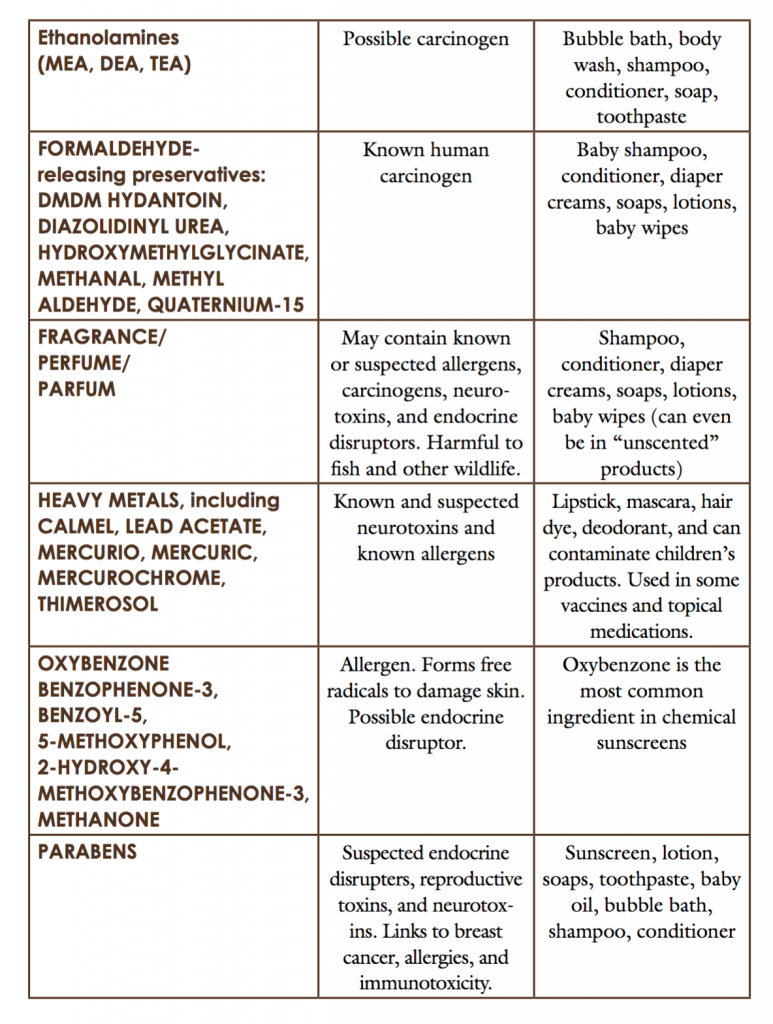

Save
]]>Let me tell you a story.
I grew up poor. American Midwest, subsidized-housing poor. Dirty needles and gunshots on the playground poor. Blocks of orange plastic stuff that was called cheese and came in boxes to your doorstep kind of poor.
On the other hand, I work really hard to give my kids the best of what a North American lifestyle has to offer: we live in a nice townhouse, they attend private school, we eat organic food, use natural skincare and all the things that you might expect from the kids of The Green Mama.
Yet, despite all of this, my childhood was healthier than my children’s childhood. Kids today are part of a generation where very few of them will have it as good as we did, no matter how badly we had it.
Are things really so much worse?
To try and help answer this, I am going to share some numbers. The “Scary Stats.”
- 74 billion pounds of industrial chemicals imported or manufactured everyday in North America
- Every 2 ½ seconds a new chemical is synthesized or discovered
- Fewer than 200 of these have been tested for human health and safety
- Children born today in North America have over 130 different suspected or known toxins in their bodies at birth.
We also know that childhood diseases are on the rise. In the last twenty years we have seen precipitous increases in diseases such as allergies, asthma, ADHD, autism spectrum disorders, childhood obesity, Type 2 diabiates—which used to be called adult onset—and childhood cancers. In some cases—such as asthma and diabetes the rise as been so great—four fold and more—that the diseases are being called epidemic. Autism rates have risen almost 8 fold in just 10 years. Who here knows someone living with a chronic disease?

These are all indicators to me, that we are getting something terribly wrong.
I love science. I love statistics. and I love stories. Together, all three of these, can help us understand just what is going in our children and with our selves, our communities, our future. Yet, I most caution you to beware the person, organization, or company that uses just one of these—science, statistics, or personal stories—and claim it as the truth.
To become experts on the care of our children, we must learn to do three things: 1. Fake it until you make it. 2. Worry Smarter. and 3. Ask Better Questions.
1. Fake it until you make it
Early in my green mama career I was hired by a daycare that wanted to go green. They were opening as a high-end option in Chicago during the recession. They decided to go green as a way to set themselves apart. They did everything I recommended—healthy finishes, green cleaning practices, natural mattresses and toys, organic food, breastfeeding stations… everything. A year after they opened, I came back to interview them. I wanted to know which thing had had the most bang for the buck—the easiest with the greatest impact.
“Cloth diapers” was the answer. They had taken what I had considered a far-fetched suggestion and decided to exclusively cloth diaper all 130 of their young children. I had had to train all of their staff as none of them had every used a cloth diaper before. Yet, when I did the follow-up review, two of the staff were pregnant and planning to cloth diaper there children. They spoke about how easy it was, how much less the cloth diapers smelled, and the two semi-truck loads of diapers they were saving from the landfill every year. The parents of the kids in daycare loved it—they said their kids got fewer diaper rashes and were easier to potty train.
When we had discussed cloth diapers, they had not been interested in any of these reasons. They just wanted to see the financial and marketing benefit—yet when I came back to check-in—they were true believers.
What happened?
I have always believed that we do what we believe. Right? For instance, if you believe that climate change is a problem you will drive less and make other climate-smart decisions. Thus, we try and get others to act climate-smart by brow beating them with facts so that they will believe. Surely, this study will get the likes of Donald Trump to believe in climate science, and then he will change his behaviours. But it doesn’t work this way, does it?
What I have since learned in researching the Green Mama book and especially looking at some of the current neuroscience, my understanding radically shifted. We don’t just do what we believe, we believe what we do.
The perfect example of this is when the mother is hold the new baby in her arms. She smiles at the baby, the baby smiles back. Yes. They are smiling because they love each other, but the more they do it the more that they come to love each other.
No amount of me preaching to that daycare about how green they would be and how much they would be helping the planet and the health of the children’s bums would have made them switch to cloth diapers. No, they just did it for their own reasons and, then, their belief about it shifted and the information—the facts and the stats to support that information—had room to enter.
In business we call this fake it until you make it. But it can work with so many things. You don’t have to convince your husband that green cleaning products are better. Just do it and you will see that before long he just might be the one preaching to his friends about how great they smell and how many fewer headaches he gets.
The action of doing actually lays down new neurological pathways in the brain. These pathways are also called “habits.”
And nobody is better poised to change their habits than new parents. New parents actually grown new brains. New moms develop new grey matter and both mothers and involved fathers can develop thousands of new neurological pathways almost overnight. It’s a great time to put in any new habit that you want to try—want to learn to parallel park? or, better, change a cloth diaper, read a label, or any other new parenting practice—this is the time to start.
2. Worry Smarter
When I was a new mother, we lived in Chicago and I didn’t have a car so I rode the bus and train a lot. Inevitably, every trip, the dirtiest and stinkiest homeless person would want to meet my baby and before I knew it her chubby little fingers would be wrapped around that guys dirty, stinky fingers. And then comes the moment…. where those chubby little fingers so recently exposed to who knows what—go towards her mouth.
And, what do I do? What every parent does—I go digging into the diaper bag to pull out… antibacterial hand soap, bum wipes, or some alcohol based hand sanitizer….. it’s totally normal, it’s what we all do.
Yet, we have to learn to worry smarter. Why? Because why we are biologically designed to respond to the immediate and visible dangers: the lion running arose the plain, the steeps cliff ahead, or—in this case—the dirty homeless man—what the science tells us though is that actually in this case, the child is healthier without any of the options I just mentioned.
Our skins absorbs between 60 and 90 percent of what is put on it into our bodies. A baby is closest to 90%. So, let’s look at our options. The Antibacterial hand soap or wipes contain Triclosan a known toxic pesticide that has been linked to antibacterial resistant Super Bugs and is possibly carcinogenic. The baby wipes likely contain neurotoxic phthalates and allergens from the perfumes and other ingredients. and The alcohol cleanser contains about 90% alcohol, of which 90% is being absorbed into their blood, and then possibly ingested in their mouths and YES kids really have gotten alcohol poisoning from using hand sanitizers.
At the same time we know that our immune systems develop healthier with exposure to dust, germs, and we are more bacteria than genetic material in our bodies.
Parents are designed to worry. We will always worry. But we are often designed to worry about the “Wrong” things for modern parenting—it isn’t the stranger kidnapping a child that we should worry about but the proven consequences of not letting our kids play outside unsupervised and the proven issues with our poor indoor air quality, lack of free play for kids, and lack of outdoor time.
Worry smarter.
3. Ask Questions
I’m going to tell you a secret. I’m a good girl. The only people more polite and sorry than Canadians are American Midwesterners that move to Canada. That’s me.
But good experts ask questions. We have to learn to ask questions of other experts, of researchers, of our grandmothers, institutions. And even of things like conventions, policies, and products.
Let me talk a bit more about that last one.
EcoAware Mom market includes more than 51 million women, 69% of moms, and has more than $1.45 trillion in buying power according to a 2010 Consumer Trend Watch.
In other words, you represent a lot of money. Now, I don’t know about you, but when I had kids I certainly didn’t feel rich. What I felt was the force of all those companies trying to market to me—the decision maker that represented nothing but dollars to them. And companies have gotten very good at pretending to be healthier, more ethical, and more ecologically-minded than they are in order to make money off of you.
As a parent, even more than any other time in my life, I felt like I was being treated like a consumer more than a citizen. As if all those problems I listed before that our facing our world and our children, had more to do with the choices I made in the grocery aisle, online, or in the baby store.
All of this, this idea that parents are making the wrong consumer—or even parenting—choices and that is why are children are suffering is an awful blame-the-victim kind of mentality. There was a big study that was done last year and it showed that even low income mothers now are aware of the strong sense that they “should” be doing more to protect their children at the checkout aisle. And when they can’t afford to make healthier choices, they just further feel ashamed of their parenting.
This is not to say that we should just buy anything. Actually, I believe that it is essential that we spend our dollars like votes—if we can—and this is why it is important that every consumer learns to read labels (which is the equivalent of asking questions of a product). That when possible you choose to speak to a real farmer or producer and ask them the how and why.
And we have to see ourselves as more than consumers, but as citizens. That means asking questions of our governments, elected officials, policy-makers. Why isn’t healthy and safety the default?
Here are some more questions:
Are we selling the health of our children? For what price? Who does this policy really serve?
What would it look like to really care for our children? All of them—even the one whose parents don’t have the time, the education, or the money?
Asking better questions helps us to get the answers we need in order to know how to worry smarter. It also presupposes that their is an answer—remember back to the point about faking it until you make it? The act of having a child lays the neurological pathways for the possibility of hope—right?—having a child presupposes a future for them to grow into. Similarly, asking questions presents the possibility of answers—even answers that you want.
Only we can empower ourselves to become the experts on the care of our own families. And, it can start as easily as 1, 2, 3.
Learn more about how to become the expert on the care of your family in the Green Mama book or by Asking the Green Mama a question. And, of course, don’t forget to sign up for our truly awesome newsletter for regular doses of good advice (or just a little inspiration).
]]>